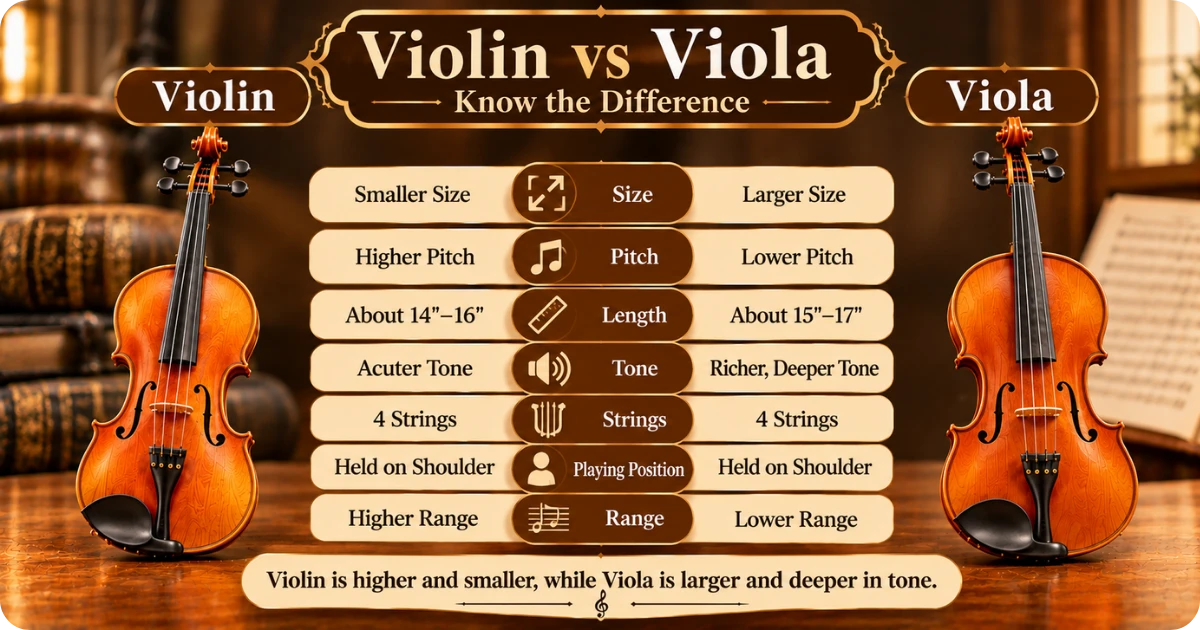
The violin vs viola difference is simple. The viola is larger, tuned a perfect fifth lower, and has a deeper, warmer tone. The violin is smaller, higher in pitch, and sounds bright and clear.
This guide compares violin vs viola size, tuning, clef, bow, and playing style. You will also learn which instrument to choose and whether you can switch from one to the other.
Violin vs Viola
Both are bowed string instruments. Both have four strings. Both sit under the chin. They look alike, but they are built and played in different ways.
What Is the Main Difference Between a Violin and a Viola?
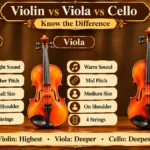
The main difference is pitch. The viola plays lower. The violin is the soprano voice of the string family. The viola is the alto voice. This is why a violin often leads the melody and a viola fills the middle harmony.
Violin vs Viola Comparison Table
| Feature | Violin | Viola |
|---|---|---|
| Body length | About 14 in (35.5 cm) | 15 to 16.5 in for adults |
| Strings | G, D, A, E | C, G, D, A |
| Clef | Treble clef | Alto clef |
| Tone | Bright, sweet, crisp | Warm, dark, mellow |
| Role | Melody | Inner harmony |
| Bow | Lighter | Heavier |
More Posts: Fiddle vs Violin
Violin vs Viola Size

A full-size viola is longer, wider, and heavier than a 4/4 violin. The extra body length gives the viola its deeper resonance.
Body Length in Inches and Centimeters
A full-size violin has a body length of about 14 inches (35.5 cm). Most adult violas measure 15 to 16.5 inches (38 to 42 cm). Some go up to 18 inches.
The size is measured from the top of the upper bout to the bottom of the lower bout. The neck and scroll are not counted.
Fractional Sizes vs Inch Sizes
Violins use fractional sizes. These run from 1/32 up to 4/4. The smallest is meant for kids as young as three or four years old.
Violas use inch sizes, not fractions. They start near 12 inches and go up to 18 inches. A 12-inch viola is about 30 cm. That is smaller than a full-size violin.
Weight, Reach, and Comfort
A bigger body means a longer reach and wider finger spacing. It also means more weight on the left arm and shoulder. A proper fit matters.
A wrong size can cause tension, poor intonation, and sore muscles. A string teacher or luthier can measure your arm length to find the right size.
More Posts: Violin vs Cello
Violin vs Viola Sound, Tuning, and Clef
Is a viola tuned lower than a violin? Yes. The viola is tuned a perfect fifth below the violin. Both instruments are tuned in fifths.
Violin vs Viola Tuning
The violin strings, from low to high, are G3, D4, A4, and E5. The viola strings are C3, G3, D4, and A4. The three higher viola strings match the three lower violin strings. The low C string is what the violin lacks.
It is also why the viola can reach darker notes. Players tune to the A string first. The standard pitch is A = 440 Hz.
Violin vs Viola Tone
The violin has a brilliant, singing tone. It cuts through an orchestra with ease. The viola has a husky, velvety timbre. Its thicker strings and larger body add warmth. Many listeners describe it as rich and emotional.
Treble Clef vs Alto Clef
Violin music is written in treble clef. Viola music uses alto clef, also called C clef. In alto clef, the middle line is middle C. This clef keeps most viola notes on the staff, so there are fewer ledger lines. Violists also read treble clef for high passages.
Reading alto clef feels strange at first. Most players adjust in a few weeks of practice.
More Posts: Violin vs Viola vs Cello
Violin vs Viola Playing Style and Role
The left-hand fingering patterns are alike. The feel is not. The viola asks for more arm weight, bigger finger stretches, and slower, deeper bow strokes.
Bow, Strings, and Finger Spacing
A viola bow is heavier and slightly wider. Its frog has a more rounded shape. A violin bow is lighter, and its frog has a sharper corner.
Viola strings are thicker. They need more bow pressure and slower bow speed to speak clearly. The notes sit farther apart on the fingerboard. A violin offers tighter spacing, which helps with fast passages.
Role in an Orchestra and String Quartet
The violin usually plays the lead melody. An orchestra has first violins and second violins. The viola sits between the violins and the cello. It acts like glue for the string section. A string quartet has two violins, one viola, and one cello.
Is Viola Harder Than Violin?
Not always. The viola needs more finger strength and bigger hand movement. The violin demands sharper finger accuracy because the notes are closer together. Both take years to master. Neither one is easy.
Violin or Viola: Which Should You Choose?
The violin is the common starting point. It has more beginner books, more teachers, and more fractional sizes for kids. The viola is a fine choice for older students and adults who love a deeper sound.
Best Choice for Beginners and Kids
Young children usually start on a fractional violin. Their small hands fit the smaller body. A child can move to a viola later. Some teachers use a small viola with young learners when the child has longer fingers and likes low tones.
Can a Violinist Switch to Viola?
Yes. The fingering is nearly the same. The bow hold is the same. The main change is alto clef and wider spacing. Many violinists switch to viola in school orchestras because violists are in demand.
Cost, Repertoire, and Career Options
A student violin outfit in the US often costs about $100 to $500. A student viola outfit usually costs a bit more. This is due to its larger size and extra wood.
The violin has a huge solo repertoire. The viola has fewer solo pieces, but orchestras often have open viola seats. That can mean better chances for scholarships and ensemble spots.
More Posts: Violin vs Guitar
FAQ’s About Violin vs Viola
What is the main difference between a violin and a viola?
The viola is larger and tuned a fifth lower. It has a darker tone and uses alto clef. The violin is smaller, brighter, and uses treble clef.
Is a viola bigger than a violin?
Yes. A full-size viola is about 15 to 16.5 inches. A full-size violin is about 14 inches.
Is the viola harder to play than the violin?
Not necessarily. The viola needs more finger strength and bow pressure. The violin needs tighter finger control. Both are challenging.
Is a viola tuned lower than a violin?
Yes. The viola is tuned a perfect fifth lower. Its strings are C, G, D, and A. The violin’s are G, D, A, and E.
Can you play viola music on a violin?
Not directly. Viola music is written in alto clef and sits lower. A violin cannot play the low C string notes. Some viola parts can be transposed, but the tone will change.
Which is better for beginners, violin or viola?
The violin is the usual first choice. It has more teaching material and smaller sizes for children. The viola suits older beginners who prefer warm, low tones.

Claire Davis is a content researcher and writer specializing in musical instruments, sizes, measurements, and comparison guides. She creates clear, practical content to help readers understand violin and other instrument sizes with confidence.