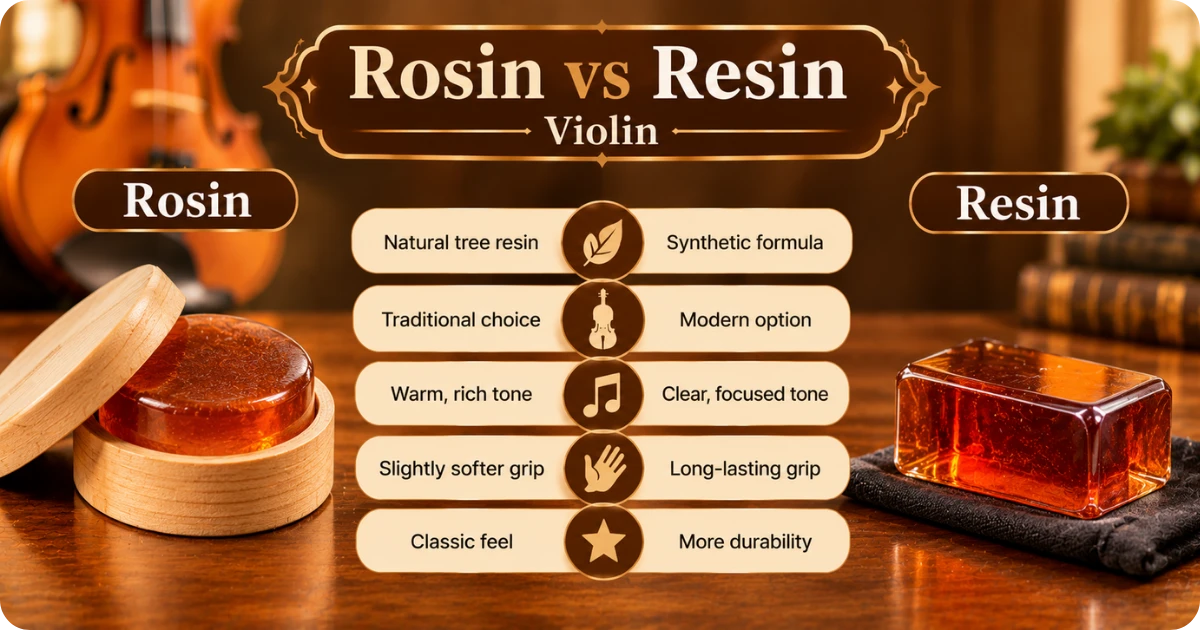
Resin is raw, sticky tree sap. Rosin is the hard, purified cake that you rub on a violin bow. Violin size does not change the rosin you need. A 1/4, 1/2, 3/4, or 4/4 violin all use the same violin rosin.
This guide explains rosin vs resin, how rosin works, and how to choose the right type. It is written for players in the USA, so it also covers humid summers and dry winters.
Rosin vs Resin for Violin: What Is the Difference?
What Is Resin?
Resin is the sticky sap that oozes from pine and spruce trees. It is soft, wet, and messy. Trees make it to seal wounds.
The word “resin” is also used for synthetic resin. Crafters use it for casting and jewelry. It has nothing to do with music.
What Is Violin Rosin?
Rosin is solid tree resin that has been heated and purified. The heat removes turpentine and other volatile oils. What remains is a hard, glassy, amber cake.
Makers often add small amounts of other ingredients. Some use gold or silver flecks. These change the grip and tone a little.
Rosin vs Resin: Quick Comparison
Resin: raw, soft, sticky, wet
Rosin: purified, hard, brittle, dry
Resin: not made for bows
Rosin: made for bow hair and strings
Can You Use Resin on a Violin Bow?
No. Raw resin is too sticky. It clumps on horsehair and makes a rough, noisy sound. It can also be hard to remove.
Craft resin is worse. It is a plastic. It can ruin the bow hair. Always use violin rosin made for bows.
No. There is no special small-size rosin. A standard violin or viola rosin works on every violin size. That includes tiny 1/16 violins and full-size 4/4 violins.
What matters is the string type, the climate, and the tone you want. It does not depend on the size of the instrument.
Rosin Cake Size and Fractional Violins
Most rosin cakes are about 1 to 2 inches wide. This is true for every violin size. A small child can use the same cake as an adult.
A student cake in a plastic or cloth case is a good start. It is easy to hold and hard to break.
Violin Rosin vs Cello and Double Bass Rosin
Rosin does change by instrument family. The lower the instrument, the softer and stickier the rosin.
Violin and viola: harder rosin for clear tone
Cello:medium-soft rosin
Double bass: very soft, extra-sticky rosin
Bass rosin is too sticky for a violin. It can make a mess on the bow hair and string.
Smooth bow hair cannot make a string vibrate. The rosin gives it grip. The bow grabs the string and pulls it sideways. The string snaps back. The bow grabs it again.
This stick-slip cycle repeats hundreds of times per second. It creates a steady tone. Without rosin, the bow slides over the string. The sound is weak and airy.
How to Apply Rosin to a Violin Bow
Follow these steps:
Tighten the bow hair first.
Hold the rosin in one hand and the bow in the other.
Make 3 to 5 slow strokes from frog to tip.
Use 2 to 3 strokes if the bow already has rosin.
Use more strokes on a new or rehaired bow.
Try the thumbnail test. Draw your thumbnail across the hair. A little rosin dust on the nail means the bow has enough.
Too Much or Too Little Rosin
Too little rosin causes a weak, thin, airy sound. The bow slips and feels slick. Too much rosin causes a scratchy sound. You will also see white dust on the strings and the violin top.
If you add too much, stop rosining for a few practice sessions. Wipe the strings and body with a soft cloth after every session. Rosin dust can harm the varnish over time.
No, you should not use resin instead of rosin.Raw resin is too wet and sticky for a violin bow. Rosin is made for bow hair and strings.
Why Raw Resin Does Not Work on Bow Hair
Raw resin still has turpentine and other volatile oils. These keep it soft and gooey. It sticks to horsehair in clumps.
The result is a rough, noisy sound. The bow grabs the string too hard. It can also leave a sticky residue on the strings and the violin varnish.
Rosin has these oils removed. It stays hard and dry, and it turns into a fine powder as you play. That powder gives smooth grip.
Is Craft or Epoxy Resin Safe for a Violin Bow?
No.Craft resin and epoxy resin are synthetic plastics. They are made for casting, jewelry, and coatings. They do not make the right friction on strings.
They can also harden on the hair and may be hard to remove. In the worst case, you may need a bow rehair.
What to Use Instead of Resin
Use violin rosin. It is cheap and easy to find. Pick by climate and string type:
Light vs Dark Rosin: Which Violin Rosin Should You Buy?
Light Rosin vs Dark Rosin
Light rosin is harder and less sticky. It gives a bright, smooth sound. Many violinists and violists choose it.
Dark rosin is softer and grippier. It gives a fuller sound. Many cellists and bassists choose it.
The color links to the harvest season. Sap collected in early spring is lighter and harder. Sap collected later in the year is darker and softer.
Best Rosin for USA Climates
Climate changes how rosin feels.
Hot, humid weather (Southern states in summer): light rosin works best. Dark rosin can get too sticky.
Cold, dry weather (Northern states in winter): dark rosin works best. Light rosin can feel slick.
String type also matters.
Steel strings: harder rosin
Synthetic strings: medium rosin
Gut strings: softer rosin
Rosin Types, Allergies, and Shelf Life
Rosin comes from three main sources: gum rosin (from living trees), wood rosin (from old stumps), and tall oil rosin (a paper-making by-product).
Rosin dust can irritate the nose and eyes. Some players are allergic to the resin acids in it. Hypoallergenic rosin makes very little dust and may help.
Rosin does not last forever. It dries out and gets brittle. Signs of old rosin include less grip, flaking, and uneven wear. Many makers suggest a new cake about every 2 years. Store it in a case away from heat and cold. Rosin is brittle and can shatter if dropped.
What is the difference between rosin and resin for a violin?
Resin is raw tree sap. Rosin is the solid, purified form made by heating resin. Violinists use rosin on the bow. They do not use raw resin.
Is rosin the same as resin?
No. Rosin comes from resin, but it is not the same. Resin is soft and sticky. Rosin is hard and dry. Heating resin removes turpentine and turns it into rosin.
Do I need a special rosin for a 1/2 or 3/4 size violin?
No. Any standard violin or viola rosin works on 1/2, 3/4, and all other sizes. Pick rosin by climate and tone, not by violin size.
Can I use cello or bass rosin on a violin?
Cello rosin can work, but it is softer. Bass rosin is too sticky and can make a mess. Stick to violin rosin for the best sound.
Is light or dark rosin better for a violin?
Neither is better for everyone. Light rosin suits hot, humid weather. Dark rosin suits cold, dry weather. Many violinists keep one of each.
How often should I rosin my violin bow?
Use 3 to 5 strokes every few days if you play often. Add more if the bow slips or sounds weak. Stop if you hear a scratchy tone or see heavy dust.
Claire Davis is a content researcher and writer specializing in musical instruments, sizes, measurements, and comparison guides. She creates clear, practical content to help readers understand violin and other instrument sizes with confidence.