The piano is easier to start. You press a key and get a clear note. The violin is smaller, lighter, and cheaper to begin with, but it takes more time to sound good.
This guide compares violin vs piano on size, difficulty, cost, and age. Use it to pick the right instrument for you or your child.
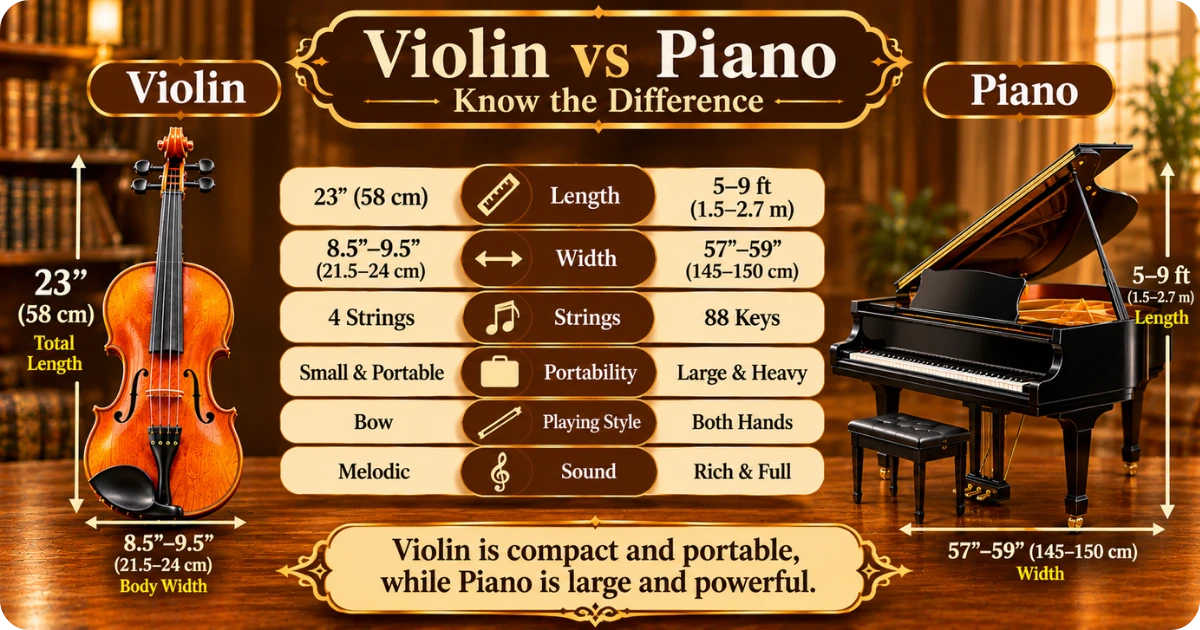
Violin vs Piano Key Differences
Which Is Better to Learn, Violin or Piano?
Neither is better for everyone. The piano suits people who want quick results and chords. The violin suits people who love melody and want a portable instrument. Your goals, budget, and space decide the answer.
Sound and Role of Each Instrument
The piano plays melody, bass, and harmony at the same time. It can work as a solo instrument or as an accompaniment.
The violin plays one melody line at a time. It can copy the human voice, and vibrato adds feeling. It leads in orchestras and string quartets.
How Each Instrument Makes Sound
A piano has hammers that strike strings when you press a key. A violin makes sound when a bow moves across the strings. Your left-hand fingers change the pitch.
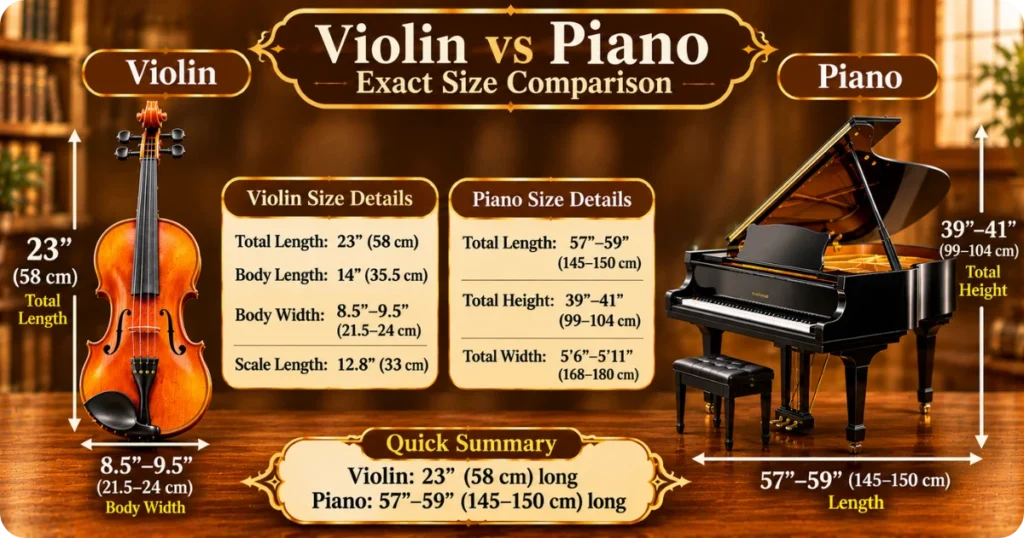
Violins come in fractional sizes: 1/16, 1/10, 1/8, 1/4, 1/2, 3/4, and 4/4. The 4/4 is the full-size violin. It is about 23 inches long, with a body of about 14 inches. It weighs around 1 pound.
Size depends on arm length, not only age. Stretch the arm out to the side. Measure from the neck to the middle of the palm.
4/4: about 23 inches or more (usually age 11 and up)
3/4: about 22 to 23 inches (usually age 9 to 11)
1/2: about 20 to 22 inches
1/4: about 18 to 20 inches
1/8 and smaller: under 18 inches
These ranges are approximate. A violin teacher or string shop can confirm the fit. A violin that is too big causes tension and poor posture.
Piano Size and Keyboard Range
A piano has one size for everyone. It has 88 keys: 52 white and 36 black. That covers 7 1/4 octaves. A violin covers about 3 to 4 octaves.
Pianos come in three types: upright, grand, and digital. An upright is often 300 to 800 pounds. A grand piano is larger and needs a big room.
Kids still learn on a full keyboard. Their hands grow into it. A 61-key keyboard works for the first months, but 88 keys is best long term.
Portability and Space at Home
A violin fits in a case and goes anywhere. It works well for small homes, school, and travel.
An acoustic piano stays in one place. Moving it needs professional movers. A digital piano is lighter and fits apartments. It also has a headphone jack for quiet practice.
The violin is harder at the start. It has no frets and no keys to guide your fingers. You must find each note by ear. This skill is called intonation.
You also learn bow control, posture, and violin hold at the same time. A scratchy tone is common in the first months.
The piano gives a clean pitch on day one. Its early challenge is hand coordination. Each hand often plays something different.
Reading Music on Each Instrument
Violin music uses the treble clef only. Piano music uses the treble clef and the bass clef together. That means you read two staves at once.
So the piano asks for more sight-reading at the start. The violin asks for more ear training.
Long-Term Learning Curve
Both instruments get harder with time. Advanced piano needs fast finger work, pedaling, and dynamic control. Advanced violin needs shifting, advanced bowing, and perfect intonation.
Most teachers suggest 15 to 30 minutes of daily practice for beginners. Regular practice matters more than long sessions.
A student violin outfit (violin, bow, case) often costs $100 to $500. Rental is common, at about $15 to $40 per month. Kids outgrow sizes, so renting makes sense.
A digital piano with weighted keys usually costs $300 to $1,500. A used upright may cost $1,000 to $3,000. A new acoustic piano costs more.
Upkeep and Hidden Costs
A violin needs new strings about once a year. A bow rehair costs roughly $40 to $80. You may also need a shoulder rest, rosin, and a tuner.
An acoustic piano needs tuning once or twice a year. That costs about $100 to $200 per visit. A digital piano needs almost no maintenance.
Lesson Costs and Learning Options
Private lessons often cost $30 to $70 per session in the US. Online lessons and learning apps can lower the cost.
A violin needs a teacher early. Bad habits form fast. A piano is easier to start with apps and videos.
Claire Davis is a content researcher and writer specializing in musical instruments, sizes, measurements, and comparison guides. She creates clear, practical content to help readers understand violin and other instrument sizes with confidence.