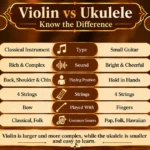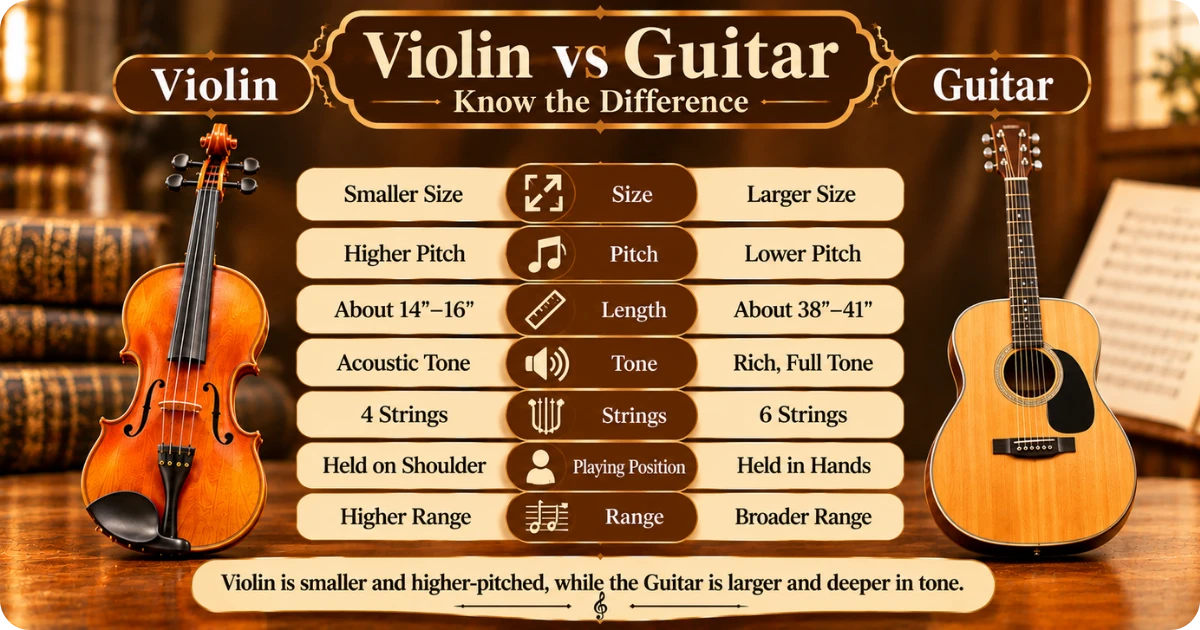
The main difference between violin and guitar is how you play them. A violin has 4 strings, no frets, and a bow. A guitar has 6 strings, frets, and is plucked or strummed. The violin is also much smaller.
This guide is for beginners, adults, and parents in the USA. It covers violin vs guitar size, sound, difficulty, and cost in simple words. It will help you pick the right string instrument for your goals.
Violin vs Guitar Differences
Violin vs Guitar Strings and Tuning
A violin has 4 strings tuned in fifths: G-D-A-E. A guitar has 6 strings tuned E-A-D-G-B-E. Most guitar strings are thicker, and steel strings can hurt a beginner’s fingertips at first.
Frets vs Fretless Fingerboard
A guitar has frets. These are metal bars that mark each note. Press between two frets and you get the right pitch.
A violin is fretless. You must place each finger in the exact spot. Being off by a few millimeters sounds out of tune. This builds a strong ear, but it takes time.
Bow vs Pick: How Each Makes Sound
A violin uses a horsehair bow. The bow gives a smooth, sustained tone. Players can also pluck the strings. This is called pizzicato.
A guitar uses a pick or your fingers. Each note starts strong and then fades. This gives the guitar its rhythmic, percussive sound.
Melody vs Chords
The guitar is a chord instrument. It plays several notes at once, so it works well for accompaniment. You can sing and play at the same time.
The violin is a melody instrument. It mostly plays one note at a time. Its curved bridge makes it easy to bow single strings. It can play two notes together, called double stops.
More Posts: Violin vs Viola vs Cello
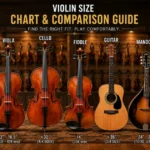
Violin vs Guitar Size Comparison

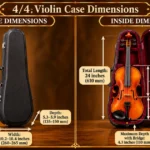
A full-size 4/4 violin is about 23 inches (58 cm) long. The body is about 14 inches (35.5 cm). The scale length is about 12.8 inches (330 mm).
A full-size guitar is about 39 to 41 inches (99 to 104 cm) long. Its scale length is 24 to 26 inches (610 to 660 mm). It also has a wider, deeper body.
Violin Sizes by Arm Length
Violin size depends on arm length, not age. A child who is too small for a violin will struggle with posture and tone.
To measure, stretch the left arm straight out with the palm up. Measure from the neck to the wrist. Charts vary slightly, but these are common ranges:
- 4/4 (full size): about 23.5 inches or more
- 3/4: about 22 to 23.5 inches
- 1/2: about 20 to 22 inches
- 1/4: about 18 to 20 inches
Smaller sizes include 1/8, 1/10, and 1/16.
Here is a quick scroll test. Hold the violin under the chin with the arm out. The child should wrap the hand around the scroll with ease. If not, try a smaller size.
Guitar Sizes by Age
Guitar size is often linked to age. This chart works for a classical guitar:
- 1/4 size: about 30 inches, ages 4 to 6
- 1/2 size: about 34 inches, ages 7 to 9
- 3/4 size: about 36 inches, ages 10 to 12
- Full size: about 39 inches, ages 13 and up
Some children move to full size a little earlier. A seated trial helps. The child’s elbow should rest on the top of the guitar’s lower body, at chest height.
How Each Instrument Is Held
A violin sits between the left shoulder and chin. This feels odd at first and can strain the neck and shoulder. A shoulder rest and chin rest help.
A guitar rests on the lap or hangs from a strap. Most players find this more comfortable.
More Posts: Violin vs Cello
Violin vs Guitar Sound and Music Styles
Tone, Volume and Practice Noise
A violin has a lyrical, singing tone. It can play very soft or very loud, so it feels close to the human voice. Its range is about 4 octaves. A guitar’s range is about 3.5 octaves.
A beginner violin is also loud. Many players use a practice mute in apartments. An acoustic guitar is quieter. An electric guitar is nearly silent without an amp.
Best Genres for Each Instrument
The guitar leads in rock, pop, blues, country, metal, and jazz. It also fits flamenco and folk.
The violin shines in classical music and orchestras. It is also common in bluegrass, fiddle, Celtic, and Indian classical music.
Solo vs Group Playing
A guitar can stand alone. You can play chords, bass notes, and melody together. That makes it great for songwriting and singing along.
A violin blends into a group. Orchestras, string quartets, and school ensembles often need violinists. This makes it easier to find a group to join.
More Posts: Violin vs Viola
Violin vs Guitar: Which Is Harder to Learn?
The violin is harder at the start. The guitar is easier to start but takes years to master.
Learning Timeline for Beginners
On guitar, many beginners play basic chords and a simple song in a few weeks. Chord changes take a bit longer.
On violin, a clean bowed note can take several weeks. A simple tune may take 2 to 3 months. Sounding smooth often takes 6 to 12 months. The gap shrinks after the first year or two.
Posture, Comfort and Finger Pain
Guitar beginners often get sore fingertips until calluses form. A nylon-string classical guitar is gentler than steel strings.
Violin players can feel neck, back, and arm strain. A good teacher and a proper fit prevent most problems.
Can You Learn Both?
Yes, but start with one. Practice for about a year before adding the second. Skills like rhythm, note reading, and ear training carry over. A second instrument is easier to learn.
More Posts: Fiddle vs Violin
Violin vs Guitar Cost and Which to Choose
Cost of Violin vs Guitar Setup
A violin needs the instrument, bow, rosin, case, shoulder rest, and spare strings. A bow needs a rehair from time to time.
A guitar needs the instrument, case, tuner, and strings. An electric guitar also needs an amp. Violins often have more small ongoing costs.
Best Choice for Kids
Violins come in fractional sizes, so most families rent as the child grows. Guitars come in fewer sizes, so a 3/4 size can last several years.
A patient child who likes structure may enjoy violin. A child who wants quick songs may prefer guitar. Many school orchestras offer violin, which helps motivation.
Best Choice for Adult Beginners
Choose the music you love. If you want to sing and strum, pick guitar. If you love classical, fiddle, or orchestral sound, pick violin.
Also think about noise, patience, and goals. A trial lesson on each is the fastest way to decide.
More Posts: 1/8 Violin Size
FAQ’s About Violin vs Guitar
Is violin harder than guitar?
Yes, at the start. The violin has no frets, and the bow takes skill. Guitar gives clean notes sooner. The gap narrows after the first year or two.
Which is better to learn first, violin or guitar?
Pick the one that plays the music you love. Guitar is easier to start. Violin builds a strong ear, which helps if you learn guitar later.
What is the size difference between a violin and a guitar?
A full-size violin is about 23 inches long. A full-size guitar is about 39 to 41 inches long. The guitar also has a longer scale length.
Is a violin more expensive than a guitar?
Often a little, because of the bow, rosin, and shoulder rest. Beginner prices for both can be low. Many families rent violins for kids.
Can a violin play chords like a guitar?
Only in a limited way. A violin can play two notes at once, called double stops. Its curved bridge makes full, held chords hard.
Which is better for a child, violin or guitar?
It depends on the child. Violin suits patient kids and school orchestras. Guitar suits kids who want quick, familiar songs. Correct size matters for both.
Is the guitar older than the violin?
Yes. Guitar-like instruments are older. The modern violin appeared in Italy in the early 1500s.

Claire Davis is a content researcher and writer specializing in musical instruments, sizes, measurements, and comparison guides. She creates clear, practical content to help readers understand violin and other instrument sizes with confidence.